
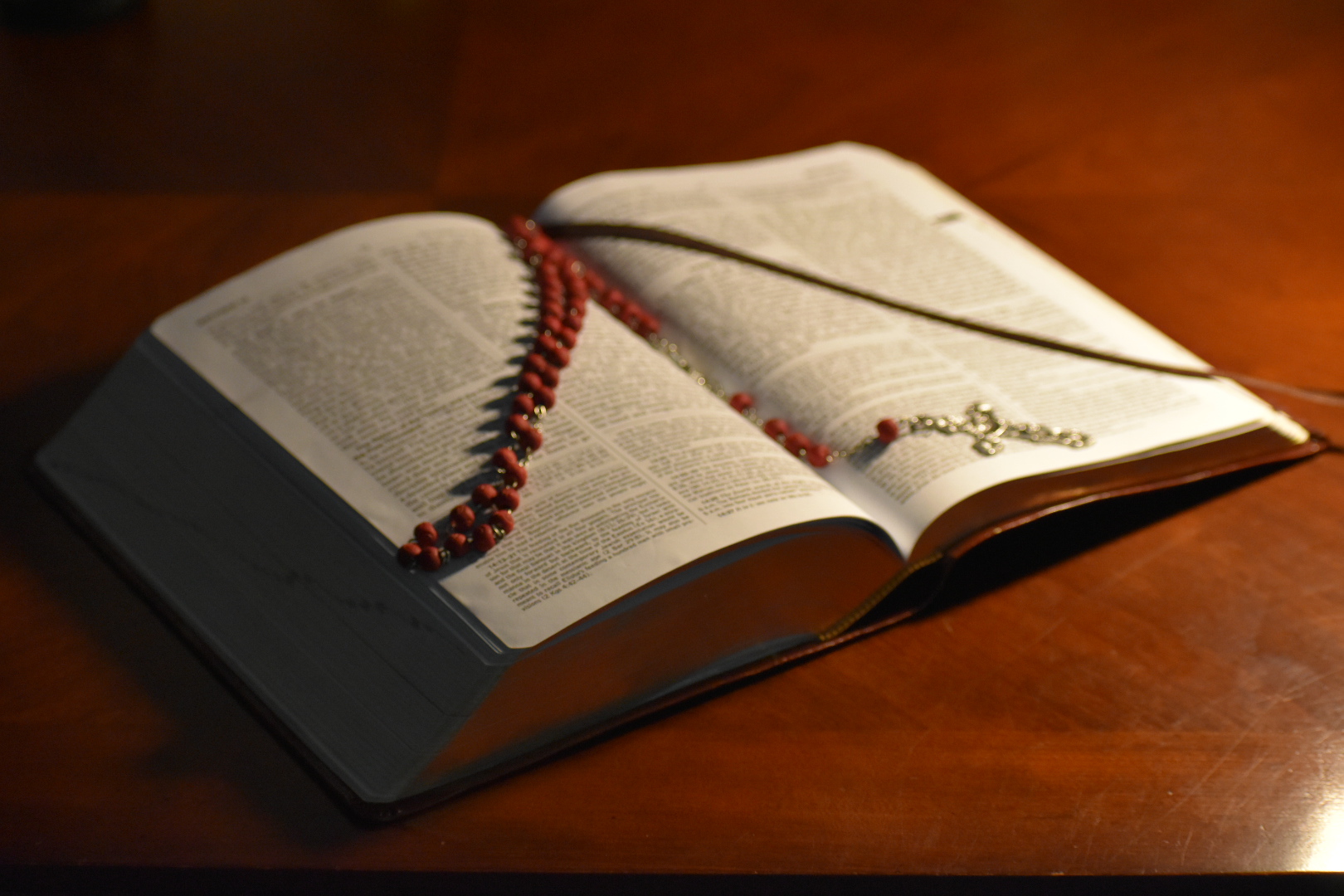
Hello Dear Reader!
One of my favorite quotes in the world comes from Bishop Fulton Sheen and it goes like this: “There are not one hundred people in the United States who hate the Catholic Church, but there are millions who hate what they wrongly perceive the Catholic Church to be.”
I recently discovered, while attending a class at a Protestant church, that there is a belief among some Protestants which says that “if the Catholics didn’t have the Bible, they think they’d still be fine [saved]”. When I first heard that I almost fell out of my chair in disbelief! There are no words to describe how I felt at that moment (hence the title of this article)! Rather than speculate on where the pastor teaching this may have gotten this misinformation, I would like to hit the facts and give supporting evidence as to why this assumption is just plain WRONG…
Just so you are aware dear reader, this article will be a little different in style compared to my past articles as it will be more of an apologetic list to counter this outrageous assumption. I was so shocked to learn that this assumption was and IS being “officially” taught that I felt the need to first, let my Catholic brothers and sisters know how to defend against this claim and second, to let my Protestant brothers and sisters know that this claim is NOT TRUE!
Are you ready? Okay! Here we go!
In order to make an attempt at actually clarifying what The Catholic Church believes regarding Scripture, let’s go to The Catechism of The Catholic Church… To briefly sum up what The Catechism is, it is a book that essentially clarifies the beliefs, doctrines and dogmas of The Catholic Church (this is probably an overly basic explanation but that’s enough for our purposes here). Let me be very clear that I am not going to recite every paragraph in The Catechism that speaks of Sacred Scripture as I do not wish this article to be overly lengthy, but I will definitely hit the necessary highlights in order to refute this ridiculous and erroneous claim… To start this off, let me just go ahead and say that IF The Bible had not been compiled, The Catechism itself would be MUCH smaller in size as there are MANY references to Sacred Scripture within it.
Regarding The Interpretation of the Heritage of Faith:
“…This Magisterium is not superior to the Word of God, but is its servant. It teaches only what has been handed on to it. At the divine command and with the help of the Holy Spirit, it listens to this devotedly, guards it with dedication, and expounds it faithfully. All that it proposes for belief as being divinely revealed is drawn from this single deposit of faith.” (CCC 86)
Regarding Christ – The Unique Word of Sacred Scripture:
“…the Church has always venerated the Scriptures as she venerates the Lord’s Body. She never ceases to present to the faithful the bread of life, taken from the one table of God’s Word and Christ’s Body.” (CCC 103)
“In Sacred Scripture, the Church constantly finds her nourishment and her strength, for she welcomes it not as a human word, ‘but as what it really is, the word of God.’ ‘In the sacred books, the Father who is in heaven comes lovingly to meet his children, and talks with them.'” (CCC 104)
Regarding the Inspiration and Truth of Sacred Scripture:
“God is the author of Sacred Scripture. ‘The divinely revealed realities, which are contained and presented in the text of Sacred Scripture, have been written down under the inspiration of the Holy Spirit.’ ‘For Holy Mother Church, relying on the faith of the apostolic age, accepts as sacred and canonical the books of the Old and the New Testaments, whole and entire, with all their parts, on the grounds that, written under the inspiration of the Holy Spirit, they have God as their author and have been handed on as such to the Church herself.'” (CCC 105)
“The inspired books teach the truth. ‘Since therefore all that the inspired authors or sacred writers affirm should be regarded as affirmed by the Holy Spirit, we must acknowledge that the books of Scripture firmly, faithfully, and without error teach that truth which God, for the sake of our salvation, wished to see confided to the Sacred Scriptures.'” (CCC 107)
“Become familiar with the Bible so that it can be your compass pointing out the road to follow.”
Pope Benedict XVI
Regarding the New Testament:
“The Gospels are the heart of all the Scriptures ‘because they are our principal source for the life and teaching of the Incarnate Word, our Savior.'” (CCC 125)
Regarding the Unity of the Old and New Testaments:
“The Church, as early as apostolic times, and then constantly in her Tradition, has illuminated the unity of the divine plan in the two Testaments through typology, which discerns in God’s works of the Old Covenant prefigurations of what he accomplished in the fullness of time in the person of his incarnate Son.” (CCC 128)
“Christians therefore read the Old Testament in the light of Christ crucified and risen. Such typological reading discloses the inexhaustible content of the Old Testament; but it must not make us forget that the Old Testament retains its own intrinsic value as Revelation reaffirmed by our Lord himself. Besides, the New Testament has to be read in the light of the Old. Early Christian catechesis made constant use of the Old Testament. As an old saying put it, the New Testament lies hidden in the Old and the Old Testament is unveiled in the New.” (CCC 129)
Regarding Sacred Scripture in the Life of the Church
“‘And such is the force and power of the Word of God that it can serve the Church as her support and vigor and the children of the Church as strength for their faith, food for the soul, and a pure and lasting font of spiritual life.’ Hence ‘access to Sacred Scripture ought to be open wide to the Christian faithful'” (CCC 131)
“The Church ‘forcefully and specifically exhorts all the Christian faithful… to learn the surpassing knowledge of Jesus Christ, by frequent reading of the divine Scriptures.’ ‘Ignorance of the Scriptures is ignorance of Christ.’” (CCC 133)
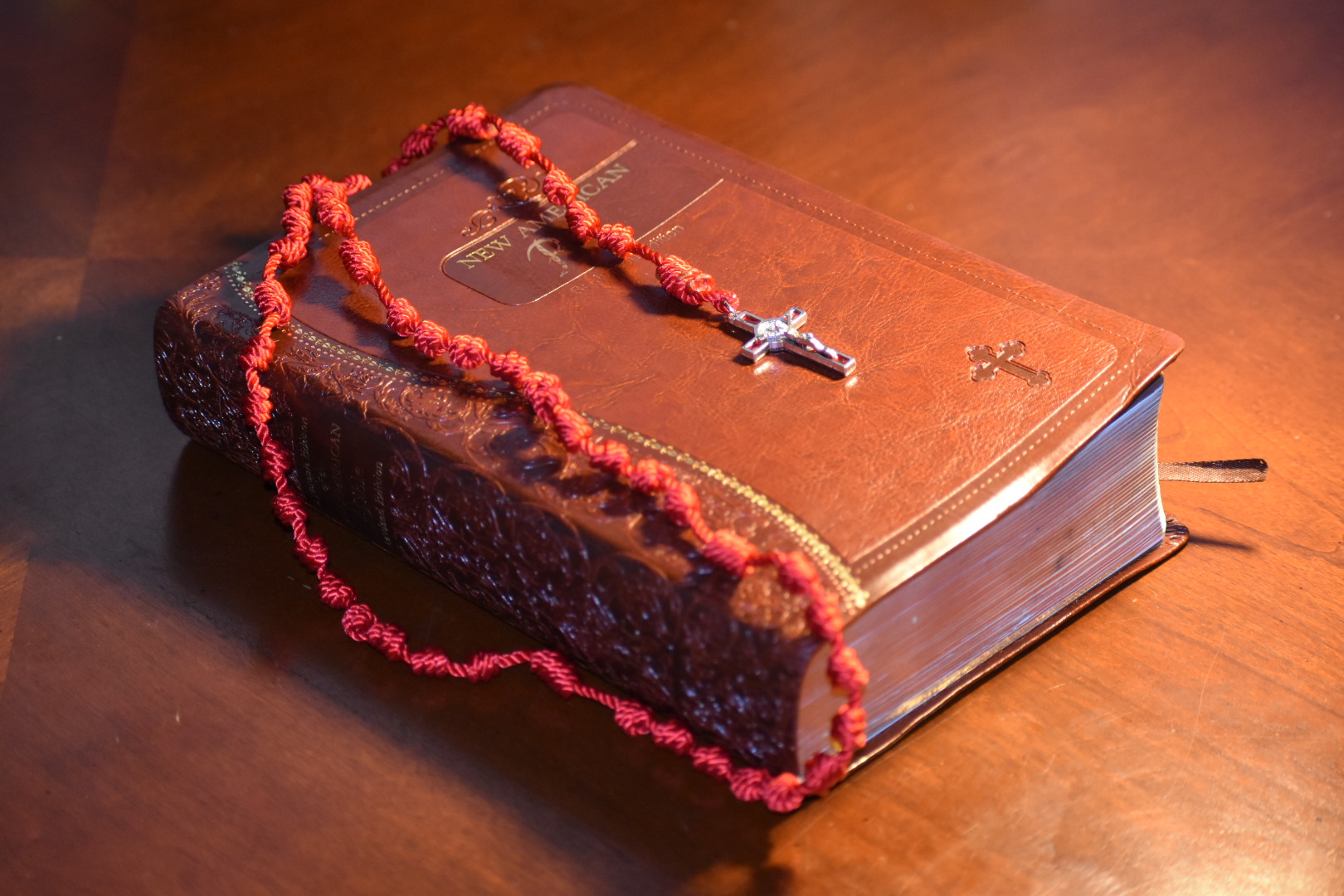
So, my dear reader, if you wish to know more about The Catholic Church’s stance on Sacred Scripture, I encourage you to go out and get a Catechism so you can learn more for yourself.
In case you have never been to a Catholic Mass (or payed attention), at every single Mass there are no less than two readings recited (usually 3 on the weekends). When there are 3 readings, between the 1st and 2nd reading we recite or sing a Psalm. There is usually a reading from the Old Testament, a reading from one of the apostolic letters and then finally a gospel reading. The Mass itself is literally SOAKED in Sacred Scripture! I would say that The Mass takes us from the story of creation all the way to Jesus’ ascension and beyond!
Archbishop Fulton Sheen
“The Old Testament is like a radio with its hidden voice announcing the One to come. The New Testament is like a television because the Word became both audible and visible.”
I hope you can see that this particular claim that Catholics think they don’t need Sacred Scripture is completely and utterly false. Sacred Scripture plays a vital role in the life of The Catholic Church and it always will. If The Church didn’t need the Bible or felt that Scripture was not important, she would not have given it to the world… But that subject, my dear reader, is for a later time…
Additional Thoughts: Since priginally posting this article, a friend has raised to me, a point which completely slipped my mind so I have taken the liberty of tacking on a few more thoughts here… One thing that I do want to point out is that I believe the original quote as stated: “if the Catholics didn’t have the Bible, they think they’d still be fine [saved]”, should be put into the correct context. It is my belief that the person who made this statement (based on the person’s tone of voice, the statements and dialogue surrounding this particular statement and the setting of the environment we were in) meant to imply that The Catholic Church does not believe the Scriptures to be important.
For the first several centuries, there was no Bible as we know it. With that being said, even the following quote can be found in the comment section below, I feel compelled to add a portion of my friend’s comment here because I could not have said it better myself… “Our salvation is not dependent on the Bible or any other book, but rather on the saving action of Jesus Christ on the cross. If we did not have the codified cannon of the Bible, we would carry on much like the Church did for the first four hundred years. I would dare any protestant to say that the apostles and all those early Christians were not saved for lack of a book.” Please forgive me for any confusion about my argument here as I just want to help put it in the correct light for you to better understand the point I am trying to make. The Catholic Church does hold Sacred Scripture to be extremely important, as noted above in CCC 133, for all the Christian faithful who are on their journeys as followers of Christ.
May ALL Glory be to the Father, to the Son and to the Holy Spirit forever, as it was in the beginning, is now and ever shall be… Amen.
Until Next Time Dear Reader…
Your Humble Servant in Christ,
William
 William's Catholic Journey
Amen young man.
LikeLiked by 1 person
Just to stir things up a bit, I’m going to agree with the protestant comment. Our salvation is not dependent on the Bible or any other book, but rather on the saving action of Jesus Christ on the cross. If we did not have the codified cannon of the Bible, we would carry on much like the Church did for the first four hundred years. I would dare any protestant to say that the apostles and all those early Christians were not saved for lack of a book.
LikeLiked by 1 person
I have to agree with you in that we are not dependent on the Bible itself as the saving instrument of grace for our salvation. As we both know that’s the purpose of the gifts of the Church and the Sacraments even though God is not bound by them. I should have worded my point more carefully in that we as Catholics do not see the Bible as unimportant or insignificant which I believe is what the presenter in this case was inferring.
LikeLike